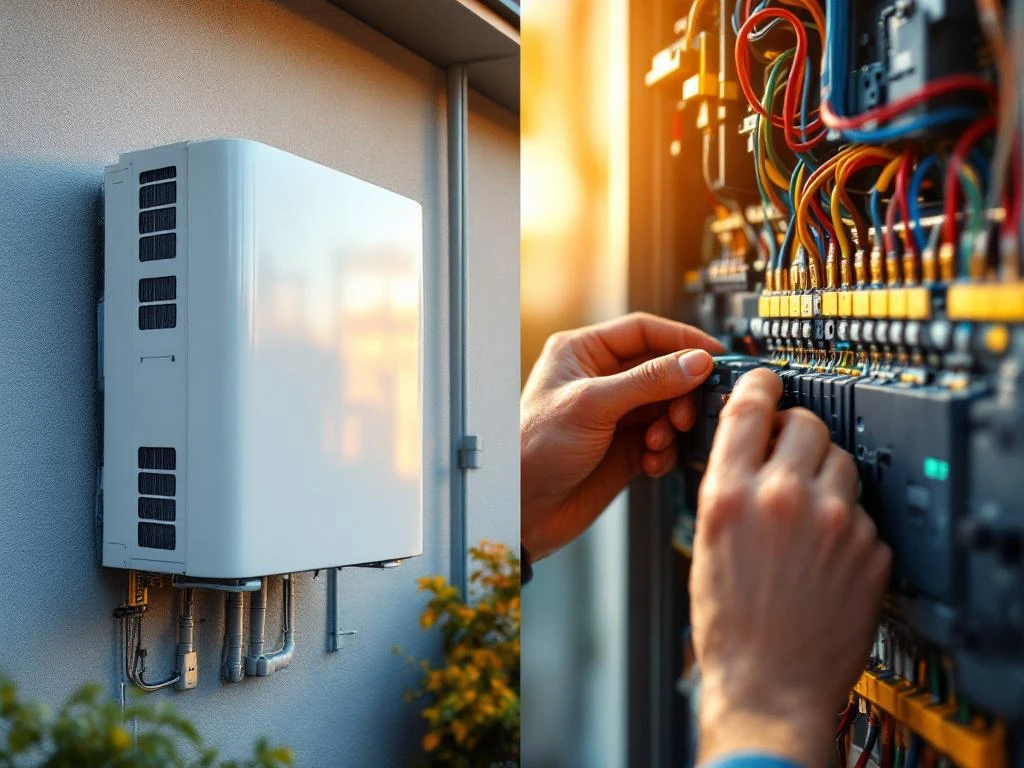
Ja, en elektriker kan hjelpe med mange aspekter av varmepumper, spesielt det elektriske arbeidet. En autorisert elektriker håndterer strømtilkoblingen, sikringsboksen og elektrisk sikkerhet når du installerer eller reparerer varmepumpen din. Noen elektriske problemer med varmepumper kan løses av en elektriker alene, mens andre situasjoner krever samarbeid med en varmepumpemontør som har spesialkompetanse på kjølesystemer og mekanisk installasjon.
Hva gjør egentlig en elektriker ved varmepumpeinstallasjon?
En elektriker håndterer alt elektrisk arbeid ved varmepumpeinstallasjon. Dette inkluderer tilkobling til strømnettet, installasjon av riktig sikring og jordfeilbryter, samt oppgradering av elektrisk anlegg hvis nødvendig. Elektrikeren sørger for at varmepumpen får stabil strømforsyning og at installasjonen følger gjeldende forskrifter.
Det elektriske arbeidet ved varmepumpe installasjon krever autorisasjon. Elektrikeren må vurdere om eksisterende elektrisk anlegg tåler belastningen fra varmepumpen, og om det trengs egen sikring. Mange varmepumper trenger kraftigere strømtilførsel enn vanlige stikkontakter kan levere, spesielt større modeller for oppvarming av hele huset.
Elektrisk sikkerhet er viktig for varmepumpens ytelse og levetid. Feil spenning, dårlige forbindelser eller feil dimensjonert sikring kan føre til at varmepumpen ikke fungerer optimalt eller går i stykker. En kvalifisert elektriker sikrer at installasjonen er trygg og at varmepumpen får den strømmen den trenger for best mulig drift.
Elektrikerens ansvar stopper vanligvis ved det elektriske. Selve monteringen av varmepumpeenheten, kjølerørene og håndteringen av kjølemedium gjøres av en varmepumpemontør med spesialkompetanse på kjøleteknologi.
Trenger du både en elektriker og en varmepumpemontør?
Ved installasjon av nye varmepumper trenger du ofte både en elektriker og en varmepumpemontør. Varmepumpemontøren installerer selve enheten og kjølesystemet, mens elektrikeren kobler til strømmen og sørger for elektrisk sikkerhet. Noen fagfolk har begge kompetansene, men det er ikke vanlig.
Kompetansekravene er forskjellige for de to fagområdene. Håndtering av kjølemedium krever sertifisering etter kjølemiddelforskriften, mens elektrisk arbeid krever autorisasjon som elektriker. Mekanisk montering av varmepumpen, plassering av utedel og innedel, samt tilkobling av kjølerør er varmepumpemontørens område.
Mange installasjonsprosjekter organiseres slik at varmepumpeleverandøren koordinerer begge fagfolkene. Du får ett kontaktpunkt som sørger for at både elektriker og varmepumpemontør kommer når de skal. Dette gjør prosessen enklere for deg som kunde.
Ved reparasjoner kan situasjonen være annerledes. Hvis problemet er rent elektrisk, holder det ofte med en elektriker. Hvis feilen ligger i kjølesystemet eller kompressoren, trenger du en varmepumpemontør. Noen ganger må begge fagfolkene se på anlegget for å finne årsaken til problemet.
Hvilke elektriske problemer med varmepumper kan en elektriker løse?
En elektriker kan diagnostisere og reparere elektriske feil som gjør at varmepumpen ikke får strøm eller fungerer ustabilt. Dette inkluderer problemer med sikringer som går, feil på strømforsyningen, defekte kabler, problemer med termostat og feil i elektriske komponenter som kontaktorer og reléer.
Vanlige elektriske problemer elektrikeren løser:
- Sikringen går hele tiden når varmepumpen starter eller er i drift
- Varmepumpen får ikke strøm selv om sikringen er på
- Ustabil drift med hyppige av- og påkoblinger
- Termostaten reagerer ikke eller viser feil temperatur
- Elektriske forbindelser som er blitt løse eller korroderte
- Problemer med jordfeilvernet som utløses
- Feil spenning til varmepumpen som påvirker ytelsen
Elektrikeren kan også sjekke om varmepumpen trekker riktig strøm under drift. Avvik kan indikere elektriske feil i selve enheten. Hvis problemet ligger i kompressoren, kjølesystemet eller mekaniske deler, må en varmepumpemontør ta over.
Det er viktig å skille mellom elektriske feil og kjøletekniske problemer. En elektriker kan ikke håndtere kjølemedium eller reparere kompressoren, men kan finne ut om strømforsyningen til disse komponentene fungerer som den skal.
Hvordan vet du om varmepumpeproblemet ditt er elektrisk eller mekanisk?
Elektriske problemer viser seg ofte ved fullstendig strømbrudd, sikringer som går, eller at displayet ikke lyser. Mekaniske eller kjøletekniske problemer gir vanligvis symptomer som rare lyder, manglende varme eller kjøling selv om enheten får strøm, eller feilkoder som vises på displayet.
Tegn på at problemet er elektrisk:
- Varmepumpen er helt død uten lys eller lyder
- Sikringen i sikringsskapet går når varmepumpen starter
- Displayet blinker eller viser strømrelaterte feilmeldinger
- Varmepumpen slår seg av og på uten åpenbar grunn
- Termostaten reagerer ikke på innstillinger
Tegn på mekanisk eller kjøleteknisk problem:
- Varmepumpen går, men gir ikke varme eller kjøling
- Rare lyder som skraping, banking eller piping fra enheten
- Vann lekker fra inneenheten
- Is dannes på uteenheten utenom normale forhold
- Feilkoder som refererer til kjølesystem eller kompressor
Noen problemer kan ha både elektriske og mekaniske årsaker. Hvis du er usikker, kan du starte med å kontakte en elektriker som kan sjekke strømforsyningen. Hvis det elektriske er i orden, vet du at problemet ligger i selve varmepumpen og trenger en varmepumpemontør.
Hvordan 24 Center hjelper deg med elektriske varmepumpeproblemer
Vi kobler deg raskt med kvalifiserte elektrikere som kan diagnostisere og løse elektriske problemer med varmepumpen din. Vår kundeservice er tilgjengelig døgnet rundt, og vi forstår at varmepumpeproblemer ofte oppstår når du trenger varmen som mest.
Slik hjelper vi deg:
- 24/7 tilgjengelighet for akutte elektriske problemer med varmepumpen
- Rask respons med elektriker på plass innen én time ved hasteoppdrag
- Autoriserte elektrikere i hele Norge som kjenner varmepumpeinstallasjoner
- Diagnostikk av elektriske feil som sikringsproblemer, strømforsyning og kabling
- Samarbeid med varmepumpemontører hvis problemet ikke er elektrisk
- Gratis kundeservice som svarer umiddelbart og kan gi råd om problemet
Når du kontakter oss, kartlegger vi problemet og sender riktig fagperson. Hvis elektrikeren finner at feilen ligger i kjølesystemet eller mekaniske deler, hjelper vi deg videre til riktig spesialist. Du slipper å lete etter flere fagfolk på egen hånd.
Ring 401 24 700 for hastesaker eller besøk 24 Center for planlagte besøk. Vi tilbyr et bredt utvalg av tjenester og hjelper deg med å få varmepumpen i gang igjen raskt og trygt.
Vanlige spørsmål
Hvor mye koster det å få en elektriker til å koble til en varmepumpe?
Kostnaden varierer avhengig av hvor kompleks installasjonen er, men ligger vanligvis mellom 3000-8000 kr. Prisen påvirkes av om du trenger oppgradering av sikringsskap, ny sikring, lengden på kabelstrekk fra sikringsskapet til varmepumpen, og om det elektriske anlegget må forsterkes. Be om pristilbud basert på din spesifikke situasjon før arbeidet starter.
Kan jeg selv koble til varmepumpen for å spare penger?
Nei, du kan ikke lovlig koble til varmepumpen selv. Alt elektrisk arbeid som involverer tilkobling til strømnettet må utføres av en autorisert elektriker i henhold til norske forskrifter. Feil installasjon kan føre til brann, elektrisk støt, skade på varmepumpen, og at forsikringen ikke dekker eventuelle skader. Det er både en sikkerhetsrisiko og kan bli svært dyrt.
Må varmepumpen ha egen sikring i sikringsskapet?
De fleste varmepumper krever egen dedikert sikring, spesielt større modeller som trekker mye strøm. Elektrikeren vurderer varmepumpens effektbehov og dimensjonerer sikringen riktig, vanligvis mellom 10-25 ampere avhengig av modell. En egen sikring sikrer stabil drift og forhindrer at varmepumpen utløser sikringer som også forsyner andre elektriske apparater i hjemmet.
Hvor lang tid tar det å få utført det elektriske arbeidet ved varmepumpeinstallasjon?
For en standard installasjon tar det elektriske arbeidet vanligvis 2-4 timer. Hvis det er nødvendig med oppgradering av sikringsskap, trekking av nye kabler over lengre avstander, eller forsterkning av strømforsyningen, kan arbeidet ta lengre tid. Elektrikeren kan gi deg et tidsestimat etter å ha vurdert din spesifikke situasjon og det eksisterende elektriske anlegget.
Hva gjør jeg hvis varmepumpen plutselig slutter å virke midt på natten?
Sjekk først om sikringen til varmepumpen har gått i sikringsskapet. Hvis sikringen er i orden og varmepumpen fortsatt ikke fungerer, kontakt 24 Center på 401 24 700. Vi sender en elektriker innen én time for å diagnostisere om problemet er elektrisk. Hvis feilen ikke er elektrisk, koordinerer vi kontakt med en varmepumpemontør for deg.
Kan en gammel bolig med gammelt elektrisk anlegg håndtere en moderne varmepumpe?
Det kommer an på tilstanden til det elektriske anlegget og varmepumpens effektbehov. Mange eldre boliger trenger oppgradering av sikringsskap eller forsterkning av strømforsyningen for å håndtere moderne varmepumper trygt. En elektriker må inspisere anlegget før installasjon og kan anbefale nødvendige oppgraderinger. Dette er en investering i både sikkerhet og optimal drift av varmepumpen.
Hvor ofte bør det elektriske anlegget til varmepumpen kontrolleres?
Det elektriske anlegget bør kontrolleres ved årlig service av varmepumpen, eller hvis du opplever problemer som ustabil drift, sikringer som går, eller rare lyder. En elektriker kan sjekke forbindelser, måle strømtrekk og spenning, og oppdage tidlige tegn på slitasje. Forebyggende vedlikehold av det elektriske kan forhindre dyre reparasjoner og forlenge varmepumpens levetid.