When your drain is clogged, you’re faced with an important choice: should you use a drain cleaning truck or manual drain cleaning? A drain cleaning truck is best for serious clogs, recurring problems, and large drain systems, while manual drain cleaning works well for simple, localized clogs in indoor pipes. The choice depends on the extent, location, and cause of the problem. We’ll walk you through the key differences and when each method works best.
What is the difference between a flushing truck and manual pipe cleaning?
A jet cleaner uses high-pressure water that is shot into the pipes at high pressure, while manual pipe cleaning involves the use of hand tools such as spirals and plungers. The jet cleaner sends a powerful jet of water through the entire pipe system and removes deposits, grease and roots from the pipe wall. Manual pipe cleaning involves using a metal spiral that rotates and breaks up the seal, or a plunger that creates pressure to loosen the blockage.
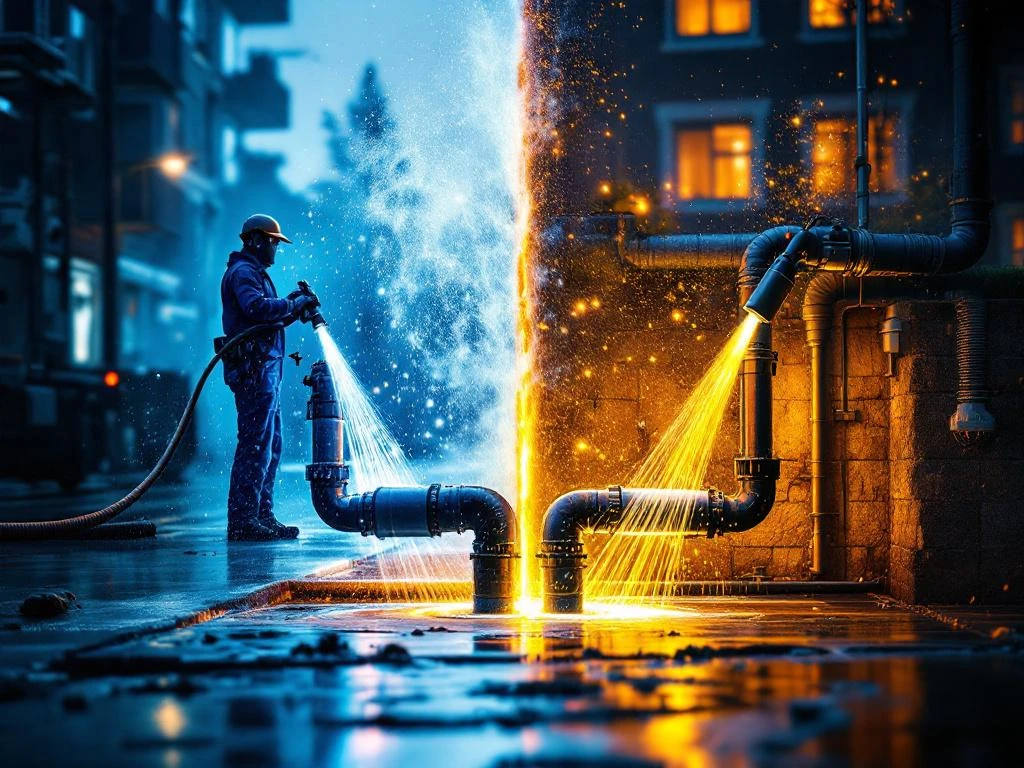
A drain cleaning requires special equipment and a large vehicle that can park close to the drain. The technician connects a high-pressure hose to a sump or downspout and directs the jet of water through the pipe system. The method thoroughly cleans the pipes, removing not only the seal but also accumulated grease and sludge that can lead to new problems.
Manual drain cleaning can be done indoors with a handheld device. The plumber inserts the spiral through the drain, and when it encounters resistance, the tool rotates to break up the blockage. This method is quicker to start and works well when the problem is localized to a specific location in the system.
When should you choose a flushing truck over manual pipe cleaning?
You should choose a drain cleaning truck when your drain is repeatedly clogged, when the blockage is complete and the water is not flowing at all, or when the problem is in the main drain outside the house. Recurring drain problems indicate that there is accumulated sediment in the pipes that manual cleaning cannot completely remove. The drain cleaning truck cleans the pipe wall and provides a more permanent solution.
Grease deposits in the drain require high-pressure flushing to be properly removed. Grease builds up on the pipe wall and gradually thickens. Manual pipe cleaning can make a hole through the grease, but the deposits remain and cause new blockages. The flushing truck flushes away the grease and gives the pipes a thorough cleaning.
Roots growing into drain pipes must be removed with a water jet. The water pressure cuts through the roots and flushes them out of the system. Larger drain systems, such as mains and common drains, are also best suited for water jet cleaning because the method reaches deep into the pipe system and cleans entire sections at once.
If manual pipe cleaning has already been attempted without lasting results, a drain cleaning truck is the next step. This may mean that the problem is more extensive than a simple blockage, or that there are multiple obstructions in the pipes that need more thorough treatment.
Which drainage problems are best solved with manual pipe cleaning?
Manual pipe cleaning works best for simple blockages in indoor drains, such as in sinks, showers, or toilets. When the problem is localized to one specific drain and water is flowing normally elsewhere, it is often a limited blockage that can be quickly resolved with a spiral or plunger. This method provides quick relief without the need for heavy equipment.
Foreign objects that have fallen into the drain, such as hairpins, toys or hygiene items, are effectively removed with manual pipe cleaning. The spiral can grab the object and pull it out, or push it through the system if possible. These are situations where high-pressure flushing may not provide a better result.
Smaller household drains with occasional problems rarely require a flushing truck. If the drain has clogged once and has not reoccurred, manual cleaning is often sufficient. This method is quicker to carry out and less expensive when the problem is not complex.
When the problem is close to the drain opening, such as in the siphon under the sink or in the first few meters of the pipe, manual pipe cleaning is the most practical choice. The technician has direct access to the seal and can solve the problem on site without extensive preparation.
How much does a flushing truck cost compared to manual pipe cleaning?
A drain cleaning truck typically costs more than manual drain cleaning because the method requires specialized equipment, larger vehicles, and often more time on site. The price is affected by how far the plumber has to travel, how complex the drain system is, and how much work needs to be done. Manual drain cleaning is more affordable when the problem can be solved quickly with simple tools.
The equipment costs for a jetting truck are significant. The truck needs to be maintained, and the high-pressure equipment represents a large investment. This is reflected in the price the customer pays. Manual pipe cleaning uses simpler tools that cost less to acquire and maintain, making the service more affordable.
On-site time varies between methods. Manual pipe cleaning of a single clog often takes less than an hour, while jetting can take longer, especially if the entire sewer system is being cleaned. Longer labor hours mean higher costs.
In the long run, a drain cleaning truck can save you money if your drains are frequently clogged. Paying for a thorough cleaning once may be more cost-effective than paying for repeated manual pipe cleaning that only provides temporary relief. Therefore, consider not only the immediate cost, but also how long-lasting the solution will be.
How do you know what drain problem you have?
The symptoms tell a lot about the type of drain problem you have. Slow drainage in multiple drains at the same time indicates a problem in the main line, while slow drainage in just one drain often means a localized blockage. If the water is completely still and not flowing at all, the blockage is total and requires quick action.
Backflow, where water comes up one drain when you use another, indicates a blockage in the common pipe. This is a serious sign that often requires a drain cleaner. Drain odors can come from accumulated organic matter, grease, or standing water in the pipes.
Repeated leaks in the same location are a clear sign that the problem has not been properly addressed. This could mean that there are deposits in the pipes that are growing back, or that there are structural issues such as damage or improper slope in the pipes. This requires a more thorough investigation and often more extensive cleaning.
Where in the system the problem occurs provides important information. Indoor drains in bathrooms or kitchens point to local leaks, while problems in basement floors or outdoor sumps indicate problems in the main drain. When you can clearly describe the symptoms, professionals can better assess the situation and recommend the right solution.
How does 24 Center help with choosing the right pipe cleaning method?
We will assess your drain problem over the phone and connect you with the right professional who has the equipment and expertise to solve the problem. Customer service asks specific questions about symptoms, location and how long the problem has lasted, so we can assess whether you need a drain cleaning truck or manual pipe cleaning.
Our network of installation partners covers the whole of Norway and has access to both flushing trucks and manual equipment. We match you with a partner who can take on the assignment and who has the right solution for your specific problem. This saves you time and ensures that the right method is chosen from the start.
The benefits of our service include:
- Immediate response from customer service who can advise and assess the problem
- Quick disconnection to qualified plumbers with the right equipment
- Response time under one hour for urgent assignments
- Free phone call where many problems can be solved with guidance
- Nationwide network that ensures local service no matter where you live
In the event of an emergency drain problem, a technician can be on site quickly to prevent the damage from getting worse. We prevent water damage from developing and ensure that the right solution is implemented immediately. Call 401 24 700 for emergencies or visit the 24 Center for scheduled visits and more information on how we can help you. You can also find all relevant contact information on our website.
Vanlige spørsmål
Can I use a high-pressure washer to clean the drain myself?
We do not recommend using a regular high-pressure washer for drain cleaning. Drain pipes require specially adapted equipment with the correct nozzle and pressure to avoid damage to the pipes. Incorrect use can lead to cracking, leaks or the seal being pushed further into the system. Always have a professional with the right equipment perform high-pressure drain cleaning.
How often should the drain be flushed with a flushing truck to prevent blockages?
For private homes, preventive sewer cleaning is recommended every 3-5 years, depending on usage patterns and the age of the sewer system. Older homes with a lot of grease or trees near sewer lines may need more frequent cleaning. Commercial properties with restaurants or commercial kitchens should clean their drains annually due to higher amounts of grease and organic material.
What should I do while I wait for the plumber in case of an emergency drain blockage?
Immediately stop using water in the affected drains to avoid flooding. Wipe up any overflowing water and move valuables away from the area. Do not use chemical drain openers just before the plumber arrives, as this can be dangerous for the technician. Keep access to sumps and drain openings clear so the plumber can quickly begin work.
Can a flushing truck damage old sewer pipes?
Experienced technicians adjust the pressure according to the condition and age of the pipe system. Modern flushing trucks have adjustable pressure that can be lowered for older or fragile pipes. The plumber will often inspect the system first and assess whether high-pressure flushing is safe. In some cases with very old or damaged pipes, manual pipe cleaning or replacement may be better options.
How do I prevent the drain from clogging after cleaning?
Avoid letting grease, cooking oil and coffee grounds down your drain, as these are the main causes of new clogs. Use drain strainers in your sink and shower to catch hair and food debris. Flush your drain regularly with hot water, and consider preventative cleaning if you have an older drain system. If you have recurring problems, have your pipes inspected for structural defects.
Does insurance cover the costs of emergency drain cleaning?
Homeowners insurance does not usually cover the actual drain cleaning, but may cover water damage that occurs as a result of the sealing. Homeowners insurance may in some cases cover emergency repairs if the sealing is due to sudden damage. Read your insurance terms carefully, and contact your insurance company promptly in the event of water damage to clarify coverage and documentation requirements.
How long does it take for the drain to be clear after a car wash?
The drain is ready for use immediately after the car wash is complete. The actual cleaning process usually takes 1-3 hours depending on the size of the system and the extent of the problem. The technician will test that the water is flowing freely before they finish the job. You can use the drain normally right away, but follow the technician's advice on preventative measures to avoid new blockages.