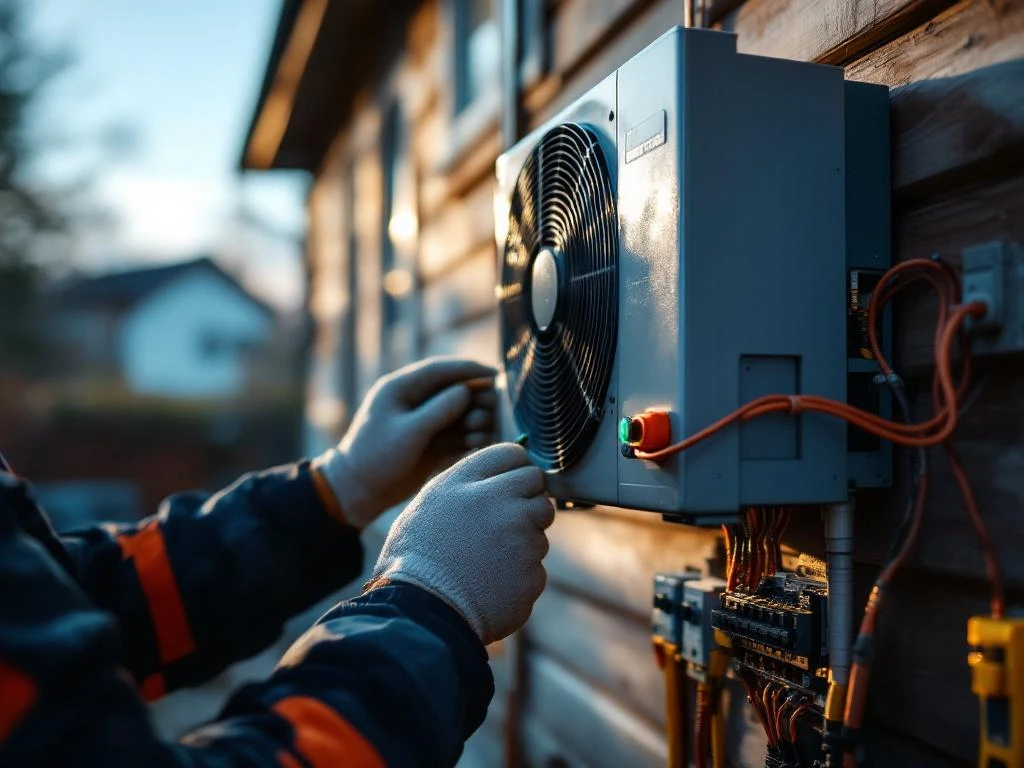
An electrician can install a heat pump, but this requires both an electrician's license and F-gas certification. The electrical connection must be carried out by an authorized electrician, while working with refrigerants requires special expertise. A complete heat pump installation includes both electrical work and handling the cooling system, which requires different qualifications. This article explains what qualifications are needed and what you should check before hiring someone for the job.
Can an electrician install a heat pump?
An authorized electrician can perform the electrical connection of the heat pump, but complete installation also requires F-gas certification. The electrical work includes power supply, fuses and wiring, while handling refrigerants requires special expertise. For the installation to be legal and safe, the person carrying out the work must have both qualifications.
Many electricians only have electrical expertise, and therefore must work with someone who has F-gas certification to complete the entire installation. Other electricians have taken additional courses and have both certifications. When considering installing a heat pump, it is important to clarify what expertise the person you are contacting actually possesses.
The authorization from DSB (Directorate for Civil Protection and Emergency Preparedness) gives the electrician the right to perform electrical installations, but does not automatically give the right to handle refrigerants. These are two separate areas of expertise that are both required for heat pump installation Norway.
What qualifications does an electrician need to have to install a heat pump?
To install a heat pump, the electrician must have authorization from DSB for electrical work and F-gas certification for handling refrigerants. The authorization ensures that the electrician has the necessary competence to carry out electrical installations safely and in accordance with the regulations. F-gas certification is required for anyone who will work with refrigeration systems that contain fluorinated greenhouse gases.
You can check the DSB authorization in the public register of authorized electricians. This register shows whether the person has a valid authorization and if there are any comments or restrictions. The F-gas certification is issued after completing a course and exam, and must be renewed at regular intervals to keep your competence up to date.
Some manufacturers also require the installer to have completed manufacturer-specific training for the warranty to be valid. This is especially true for more advanced heat pump systems. When considering who can install a heat pump, you should therefore ask about all relevant certifications and any manufacturer requirements.
The difference between electrical and refrigeration expertise
Electrical competence is about power supply, safety and correct connection of the heat pump's electrical components. Refrigerant competence includes understanding of cooling systems, pressure testing, vacuuming and charging of refrigerants. Both competences are necessary because errors in both areas can lead to dangerous situations or damage to the equipment.
What is the difference between electrical connection and complete heat pump installation?
Electrical connection only includes the power supply to the heat pump, while complete installation includes mounting both the indoor and outdoor units, connecting the refrigerant pipes, pressure testing and charging the refrigerant. The electrical work involves pulling the cable from the fuse box, installing the correct fuse and connecting the heat pump to the mains. This must be done by an authorised electrician.
Complete heat pump installation requirements also include drilling holes through the wall, mounting units, connecting refrigerant pipes, evacuating the system and charging refrigerant. This part of the work requires F-gas certification because refrigerants are regulated for environmental reasons and can be dangerous if handled incorrectly.
Refrigerant work requires specialized equipment such as vacuum pumps, pressure gauges and leak detectors. The work must be carried out with precision to ensure the system is operating efficiently and is free of leaks. Even small leaks can lead to reduced efficiency, increased power consumption and environmentally harmful emissions.
Why two separate areas of expertise?
The division is due to the fact that both electrical work and refrigerant work have their own risk factors and requirements for competence. Electrical work can lead to fire and electric shock if carried out incorrectly, while incorrect handling of refrigerants can cause environmental damage and health hazards. The regulations ensure that both areas are handled by people with the right competence.
Why is F-gas certification required for heat pump installation?
F-gas certification is required because heat pumps contain fluorinated greenhouse gases that are highly environmentally harmful if released into the atmosphere. These gases have many times higher greenhouse effects than CO2, and the EU has introduced strict rules for handling. In Norway, these rules are implemented through regulations that require anyone working with such systems to have documented competence.
F-gases are used as refrigerants in heat pumps because they have good thermodynamic properties. At the same time, they can be hazardous to health and the environment if handled incorrectly. The certification ensures that the installer knows how to handle the gases safely, avoid leaks, and follow correct procedures for recycling and disposal.
Improper installation can lead to leaks that not only harm the environment, but also make the heat pump ineffective. The system can lose pressure, freeze or break down completely. In addition, incorrect installation can lead to fines and claims for repairs, since the work was not carried out in accordance with the regulations.
Consequences of installation without F-gas certification
If someone without F-gas certification installs your heat pump, the installation is illegal. You may lose the manufacturer's warranty, and your insurance may refuse to cover any damage. In the event of an inspection, both you as the homeowner and the installer may be fined. Most importantly, an unprofessional installation can be directly dangerous for both people and the environment.
What should you check before hiring someone to install a heat pump?
Before hiring someone to install a heat pump, you should verify that the person has a valid electrician's license and F-gas certification. Ask to see documentation of both qualifications. You can check the electrician's license in the DSB public register, while the F-gas certificate must be presented by the installer.
Here is a handy checklist of what you should check:
- Authorization from DSB – Verify in the public register that the electrician has valid authorization.
- F-gas certification – Ask to see valid certificate for handling refrigerants
- Insurance – Check that the installer has liability insurance that covers any damages
- Manufacturer training – Ask if the installer has training from the manufacturer of your heat pump
- Written quote – Get a written agreement that specifies what is included in the price
- Warranty conditions – Clarify how the installation affects the manufacturer's warranty
A written quote should include information about what is included in the work, the time frame, the price, and the warranty terms. It should also state who is responsible for any errors or deficiencies during the installation. Reputable installers will provide you with this information without you having to ask for it.
Be skeptical of offers that seem unreasonably low, or installers who cannot document their qualifications. Saving money on the installation can cost you dearly later if the work is not done correctly. A professional installation ensures that the heat pump functions optimally and lasts for many years.
How we help with heat pump installation and electrical services
At 24 Center, we connect you with qualified professionals who have both an electrician's license and F-gas certification for heat pump installation. Our network of installation partners covers all of Norway and consists of trusted professionals who meet all requirements for competence and certifications.
We offer:
- 24/7 Customer Service – You can call us anytime for advice on electrical questions or heat pump installation.
- Verified partners – All our installers are checked and have the necessary qualifications
- Fast response – For urgent electrical problems, a technician can be at your location in less than an hour
- Planned installations – We help you find the right professional for heat pump installation and other electrical tasks
- Complete service – From electrical connection to complete installation and commissioning
When you contact us , you will receive immediate assistance from our customer service team who will connect you with the right professional in your area. We ensure that you receive qualified help that performs the work safely and in accordance with all applicable regulations. Call 401 24 700 for urgent matters or visit our website for scheduled installation assignments. Our services include everything from acute electrical problems to complete heat pump installations.
Vanlige spørsmål
How long does it take to install a heat pump?
A standard heat pump installation usually takes between 4-8 hours, depending on the complexity. Simpler air-to-air heat pumps can be installed in one day, while more advanced systems may require two days. The time taken is affected by factors such as the distance between the indoor and outdoor units, wall type, and whether electrical upgrades are needed.
Can I save money by doing some of the work myself?
You can prepare the area and optionally install the fasteners for the outdoor unit, but all electrical work and refrigerant handling must be performed by qualified professionals. Attempting to do these parts yourself is not only illegal, but can also result in loss of warranty, insurance coverage, and potentially dangerous situations. It is best to leave the entire installation to professionals.
How much does it cost to install a heat pump in Norway?
Installation costs typically range from 5,000-15,000 NOK depending on complexity, type of heat pump and local conditions. Simpler air-to-air installations are at the lower end, while more demanding installations with long distances between units or the need for electrical upgrades cost more. Always ask for a written quote that specifies what is included.
Do I need a building permit to install a heat pump?
You usually do not need a building permit for standard air-to-air heat pumps in detached houses, but you must follow the Planning and Building Act's requirements for distance to neighboring boundaries and noise regulations. For larger systems, ground source heat pumps with wells, or in special areas, an application may be required. Check with your municipality to be sure what applies in your case.
What happens if the heat pump stops working after installation?
Contact your installer immediately if your heat pump is not working properly. A reputable installer will return to correct any installation errors. Check the warranty terms in your written agreement – both the installer’s labor warranty and the manufacturer’s product warranty should cover various types of defects. Document the problem with photos and notes before contacting us.
Does the heat pump need to be maintained, and who can do it?
Yes, heat pumps should be serviced annually for optimal operation and long life. You can clean the filters yourself and keep the outdoor unit free of debris, but servicing the cooling system must be carried out by a professional with F-gas certification. Regular maintenance ensures efficient operation, reduces energy consumption and extends the life of the heat pump by several years.
Can I replace an old heat pump myself or do I need a professional?
You must have a professional replace your heat pump, even if you already have one installed. Removing an old heat pump requires F-gas certification to handle the refrigerant correctly, and installing a new unit requires both an electrician's license and F-gas certification. Reusing existing pipes and cables is also not always possible or recommended, depending on their age and condition.