
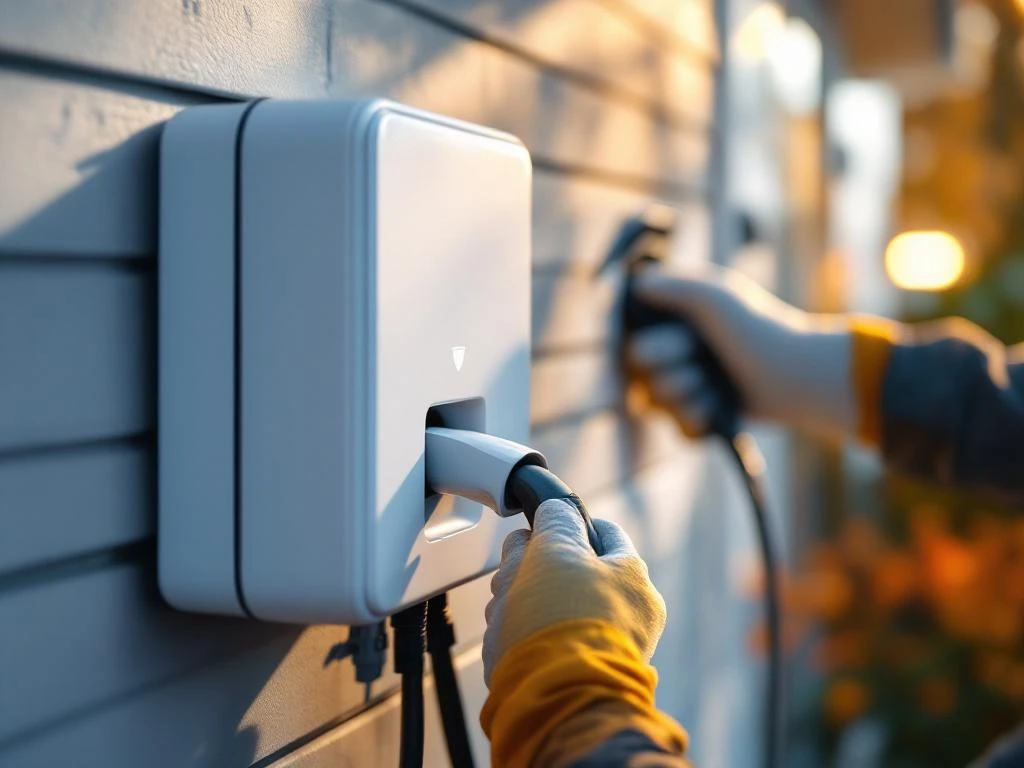
Yes, an electrician can install an electric car charger, and it is actually required that a licensed electrician perform the installation. Electric car charger installation requires extensive knowledge of electrical systems, safety, and applicable Norwegian regulations. A professional installation ensures that charging is safe and efficient, while maintaining the warranty on the equipment. This article answers common questions about electric car charger installation and what you should know before you get started.
What expertise is required to install an electric car charger?
The installation of an electric car charger must be carried out by an authorized electrician with relevant competence. This means that the electrician must have completed professional training and hold a valid authorization according to Norwegian requirements. Electric car charger installation is considered electrical work that requires a thorough understanding of the NEK 400 standards, which are the Norwegian electrical regulations.
The electrician must be able to assess the existing electrical system, size the correct fuse and cables, and ensure that the installation meets all safety requirements. Many electric car chargers require dedicated circuits and specific protective devices such as ground fault circuit interrupters. A professional installation protects you from fire hazards and electrical faults, while ensuring that the warranty on the electric car charger remains valid.
Without proper installation, you risk overloading the electrical system, which can lead to serious damage. Always choose a qualified electrician who is experienced in home electric car charger installation.
How much does it cost to have an electric car charger installed by an electrician?
The cost of an electric car charger installation varies considerably depending on several factors. Labor costs are a significant part, but it is the installation conditions that often affect the total cost the most. A simple installation in a garage with a short distance to the fuse box will be less expensive than an outdoor installation with long cable runs.
Important cost factors include the length of cables that need to be run, whether the existing electrical system needs to be upgraded, and the complexity of the installation work. If the fuse box needs to be upgraded or the main fuse needs to be increased, this will increase the total cost. The electric car charger itself is an additional cost, and the price varies based on power and functionality.
It is a good idea to get a survey and a written quote before the installation starts. This gives you an overview of what needs to be done and what it will cost. Remember that the cheapest solution is not always the best in the long term, quality and safety should weigh heavily in the choice.
What preparations need to be made before an electric car charger can be installed?
Before an EV charger can be installed, an electrician must conduct a thorough assessment of the electrical system . This includes checking the fuse box to determine if it has the capacity to handle the additional load. Many homes will need to upgrade the main fuse or fuse box to support an EV charger, especially if you choose a high-wattage charger.
The location of the charger must be carefully planned. You need to consider where the car will be parked, how far it is to the fuse box, and whether the installation will be indoors or outdoors. Outdoor installation requires weatherproof equipment and additional protection against moisture. The parking area should have good access and be convenient for daily use.
It may also be necessary to apply for permission from the power company if the installation requires increased power output. Your electrician can help you with this. Good preparation makes the installation itself faster and more cost-effective.
What is the difference between different types of electric car chargers for home use?
Home EV chargers come in different types and power levels. The most common connector types are Type 1 and Type 2 , with Type 2 being the standard in Norway and Europe. The Type 2 connector supports both single-phase and three-phase charging, providing flexibility in charging capacity.
The power of the charger is measured in kilowatts (kW) and typically varies between 3.7 kW, 7.4 kW, 11 kW and 22 kW. A 3.7 kW charger is sufficient for plug-in hybrids and cars with smaller batteries, while 11 kW or 22 kW is suitable for larger electric cars that need to be charged quickly. Higher power requires three-phase power and stronger fuses.
Smart EV chargers offer features like app control, charging scheduling, and energy metering. They can be programmed to charge when electricity prices are lowest or adjust power based on your home’s total electricity usage. Standard EV chargers are simpler and less expensive, but lack these features. Choose based on your needs, your car’s charging capacity, and your home’s electrical system.
How does an electrician ensure that the electric car charger installation is safe?
A professional electrician follows strict safety protocols during EV charger installation. Grounding and circuit protection are basic safety measures that prevent electric shock and fire. The installation must include a residual current device (RCD) that immediately cuts off the power in the event of a fault.
For outdoor installations, the electrician ensures proper weather protection and that the equipment can withstand Norwegian climate conditions. Cables must be protected from mechanical damage and moisture. All components must be sized correctly to handle the continuous load that electric vehicle charging represents.
The electrician ensures that the installation complies with NEK 400 standards and all relevant Norwegian safety requirements. This includes correct marking, documentation and testing of the system after completion. A safe installation gives you peace of mind that you can charge your car without the risk of electrical problems or damage to your home.
How does 24 Center help with electric car charger installation?
We quickly connect you with qualified electricians who have the expertise to install electric car chargers safely and efficiently. Our nationwide network of authorized professionals ensures that you receive professional help no matter where you are in Norway.
How we help you with electric car charger installation:
- 24/7 customer service: We are available 24/7 to take your inquiries and schedule installation
- Qualified electricians: All our partners are authorized and have experience with electric car charger installation
- Fast response: We ensure that an electrician can inspect and provide a quote quickly.
- Professional assessment: The electrician assesses your electrical system and recommends the best solution
- Complete installation: From inspection to finished installation, we follow you through the entire process.
Call 401 24 700 for urgent matters or visit 24 Center to book an inspection and get help with electric car charger installation. We make it easy to get a safe and compliant installation that suits your needs. Read more about our services or contact us for a no-obligation chat about your needs.
Vanlige spørsmål
Can I install electric car chargers myself if I have electrical skills?
No, even if you have electrical expertise, the installation must be carried out by an authorized electrician. This is a legal requirement in Norway, and only authorized electricians can perform and approve such installations. The installation itself also requires documentation and testing that only authorized electricians can provide. Self-installation will void the warranty on the electric car charger and may lead to insurance problems in the event of any damage.
How long does it take to install an electric car charger?
The installation itself typically takes 3-6 hours for a standard installation, but this varies based on the conditions. If the electrical system needs to be upgraded, the fuse box replaced, or excavation for wiring is required, it may take several days. A site visit allows the electrician to estimate the time more accurately. It is best to schedule the installation when you know you will have a few days at home to be available.
Do I need to upgrade the main fuse to install an electric car charger?
It depends on your current main fuse and the wattage of your EV charger. Many homes with a 16A or 20A main fuse will need to be upgraded to 25A or higher to support an 11kW or 22kW charger. A 3.7kW charger can often be installed without an upgrade. Your electrician will assess your total power consumption and the capacity of your system during the inspection to determine if an upgrade is necessary.
Can I install electric car chargers in a rented home or condominium?
In rented accommodation, you must have the landlord's written consent before installation. In a condominium or housing association, you have the statutory right to install an electric car charger in your own parking space, but you must apply to the board and follow their procedures. There may be technical limitations in older buildings with limited power capacity. Contact the board early in the process to clarify any requirements for documentation and approval.
What happens if the power grid cannot handle more electric car chargers in the neighborhood?
In areas with a large number of electric vehicles, the grid may be strained, but the grid company is responsible for upgrading the infrastructure when necessary. Modern smart electric vehicle chargers can load balance and automatically reduce power during high loads. In rare cases, the grid company may require you to install a charger with a lower power or postpone charging to off-peak hours. Contact your grid company if you are concerned about the capacity in your area.
How do I maintain the electric car charger after installation?
Electric car chargers require minimal maintenance, but you should regularly check for visible damage to the cable and connector. Keep the charger clean and free of dirt, and make sure it is securely attached to the wall. For outdoor chargers, check that the weather protection is intact. It is recommended to have an electrician do a check every 2-3 years to ensure that all safety features are working optimally.
Can I get support or deductions for electric car charger installation?
For private individuals, there is currently no direct government support scheme for home installation of electric car chargers in Norway. However, you can get a tax deduction for craftsman services (the craftsman's deduction) that covers the cost of labor, but not materials. Some municipalities and grid companies have had local support schemes, so it is worth checking with your municipality. Companies may have other support schemes through Enova.