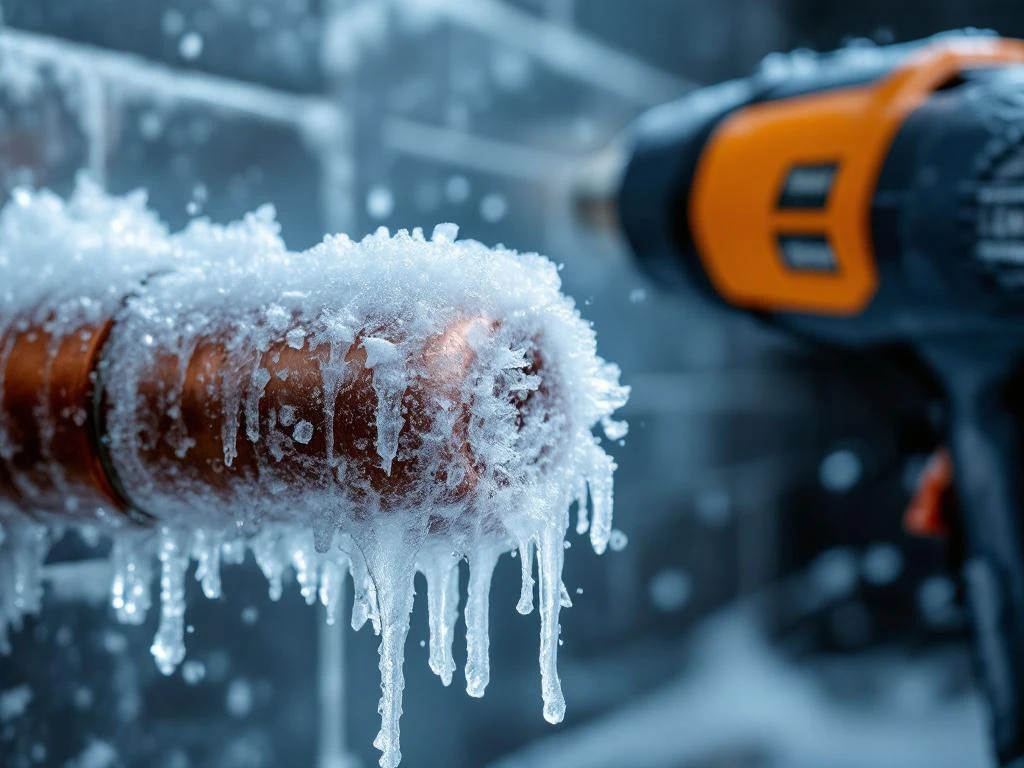
Frozen water pipes occur when water lines are exposed to below-freezing temperatures, causing the water inside the pipes to expand and potentially cause cracks. To safely thaw frozen pipes, use warm towels, a hair dryer on low heat, or heat lamps while simultaneously turning on faucets to relieve pressure. Always start thawing closest to the faucet and work your way back toward the frozen area. This guide answers the most important questions about how to identify, thaw, and prevent frozen water lines.
What are the first signs that your water pipes are frozen?
The most common signs of frozen water pipes include no or greatly reduced water flow from faucets, unusual knocking or cracking sounds from the pipes, and visible frost or rime on exposed water pipes. You may also notice that only some faucets are working while others are completely dry, indicating that the problem is localized to specific parts of the plumbing system.
When you experience these symptoms, it’s important to act quickly. Reduced water pressure in the morning after a cold night is often the first warning sign. You may also notice that the toilet doesn’t fill up as usual after flushing, or that the shower only produces a thin stream of water. If you see frost on uninsulated pipes in your basement, garage, or under your sink, it’s a clear indication that your water pipes are about to freeze or are already frozen.
Pay special attention to areas where pipes run along exterior walls, in unheated rooms, or through cold crawl spaces. These areas are most susceptible to winter damage. The sooner you identify the problem, the less likely it is that the pipes will burst and cause a water leak.
How do you safely thaw frozen water pipes at home?
To safely thaw frozen pipes, start by opening the faucet connected to the frozen pipe so that the water can drain as the ice begins to melt. Then use warm towels dipped in warm water, a hair dryer on low heat, or a heat lamp placed at least 12 inches (30 cm) from the pipe. Always start thawing closest to the faucet and slowly work your way back toward the frozen area to avoid pressure buildup.
The hot towel method works well for pipes under sinks and in cabinets. Wrap towels around the pipe and replace them with new hot towels every five to ten minutes. If you use a hair dryer, keep it moving and avoid concentrating the heat on one spot for too long. Heat lamps are effective for larger areas, but must be positioned safely to avoid a fire hazard.
It is important to never use an open flame , such as a gas burner or blowtorch, as this can damage the pipes, cause a fire, or cause water vapor to expand dangerously quickly. Also, avoid using electric heaters that are in direct contact with wet surfaces. If you cannot find the frozen area or defrosting does not work within an hour, you should contact a plumber for professional help.
Keep the heat on in the room while you work, and leave the faucet open until full water flow is restored. This can take anywhere from 30 minutes to several hours depending on how much of the pipe is frozen.
What do you do if the water pipe has burst?
If your water pipe has burst, immediately turn off the main water valve to stop the flow of water and minimize damage. Then, open all the faucets in your house to drain the water system and relieve pressure. Place buckets, towels, and mops under the leak point to collect water, and begin documenting the damage with photos for insurance purposes.
After the water is turned off, you need to assess the extent of the damage. Small cracks in exposed pipes can be temporarily sealed with duct tape or a pipe clamp, but this is only a short-term solution. Larger cracks, hidden pipes, or extensive water leaks require professional help from a plumber.
We at 24 Center can assist with a rapid response to such emergencies. Our plumbers are available 24/7 and can be on site quickly to repair burst pipes and limit winter damage. For urgent assignments, a technician can often be on site in under an hour.
While you wait for help, use a wet and dry vacuum to remove water from floors and carpets. Move furniture and valuables away from the wet area. If the leaks have affected electrical installations, turn off the power to the affected areas and have an electrician inspect before turning it back on. Contact your insurance company as soon as possible to start the claims process.
How can you prevent water pipes from freezing again?
To prevent water pipes from freezing again , insulate all exposed pipes with foam or fibrous pipe insulation, especially in unheated areas such as basements, garages and crawl spaces. Maintain a constant indoor temperature of at least 15 degrees, even when you are away, and allow faucets connected to exposed pipes to drip lightly when the temperature drops below freezing.
Drain and turn off outdoor water faucets before winter sets in. Disconnect garden hoses and let the water drain from the faucets. If you have pipes in exterior walls, you can open cabinet doors under sinks to allow warm air to circulate around the pipes. This is especially important in rooms that face north or don't get direct sunlight.
For long-term protection, consider installing heating cables along exposed pipes. These cables activate automatically in low temperatures and keep the pipes above freezing. Improved insulation in walls and floors around water pipes also provides good protection against the cold.
During longer absences during cold periods, you should either keep the heating on or drain the entire water system. To drain the system, close the main water tap, open all taps and flush the toilets. This is especially relevant for cabins and holiday homes that are empty during the winter.
Regular maintenance of insulation and sealing of air leaks around pipes significantly reduces the risk of frozen water pipes. Check all pipe insulation annually to ensure it is intact and replace worn material. This will save you from costly repairs and water leaks later.
If you are experiencing recurring frozen pipe problems or need help with preventative measures, our experienced plumbers can advise you on the best solutions for your home. Call 401 24 700 for emergencies or visit contact information to find your nearest branch, or explore our full range of services for scheduled visits.
Vanlige spørsmål
How long does it usually take to thaw a frozen water pipe?
Thawing a frozen pipe usually takes between 30 minutes to 2-3 hours, depending on how far the pipe is frozen and the method you use. Smaller frozen areas can be thawed in under an hour with a hair dryer or warm towels, while longer frozen sections may require several hours. If you do not see any improvement after one hour of active thawing, you should contact a professional plumber.
Can I use the water heater while the pipes are frozen?
Yes, you can leave your water heater running, but be aware that if both the cold and hot water lines are frozen, pressure can build up in the system. Open the faucets to relieve the pressure, and monitor the water heater for unusual noises. If you are unsure, you can temporarily lower the temperature of the water heater until the pipes thaw.
How do I find exactly where in the pipe system the freezing has occurred?
Start by checking for exposed pipes in unheated areas such as basements, garages and crawl spaces, especially along exterior walls. Feel the pipes carefully – frozen areas will feel extremely cold and may have visible frost or rime. You can also follow the piping system from the malfunctioning faucets back to the main line. If you can’t find the frozen area, it may be hidden in walls or under floors, in which case you should contact a plumber with thermal equipment.
Is it safe to leave home after I have thawed the pipes?
It is safe to travel if you have first implemented preventive measures such as pipe insulation, keeping the indoor temperature at a minimum of 15 degrees, and have checked that all pipes are functioning normally without leaks. For longer absences in extreme cold, you should consider leaving taps dripping slightly or installing heating cables on exposed pipes. Inform a neighbor or friend who can check the house regularly.
How much does it cost to repair a burst water pipe?
The cost varies significantly depending on the location of the pipe, the type of material, and the extent of the damage. A simple repair of an exposed pipe can cost between 2000-5000 NOK, while repairing hidden pipes in walls or floors can cost 10 000-30 000 NOK or more, including renovation. Insurance often covers water leaks caused by frozen pipes, so contact your insurance company quickly. Prevention is always cheaper than repair.
Do plastic and copper pipes handle freezing differently?
Yes, plastic-based pipes like PEX have greater flexibility and can expand slightly when water freezes, making them more resistant to cracking than rigid copper pipes. Copper pipes are more susceptible to cracking when frozen, but both types can be damaged if the ice doesn't have room to expand. Regardless of the pipe material, prevention through insulation and heating is the best course of action.
Should I drain the entire water system if only one pipe is frozen?
No, you do not need to drain the entire water system if only one pipe is frozen and you are actively working to thaw it. Keep the main water valve open, but open the faucets connected to the frozen pipe to relieve pressure. Draining the entire system is only necessary if the pipe has cracked and is leaking, or if you are leaving the house for an extended period of time in extremely cold weather without adequate heating.