
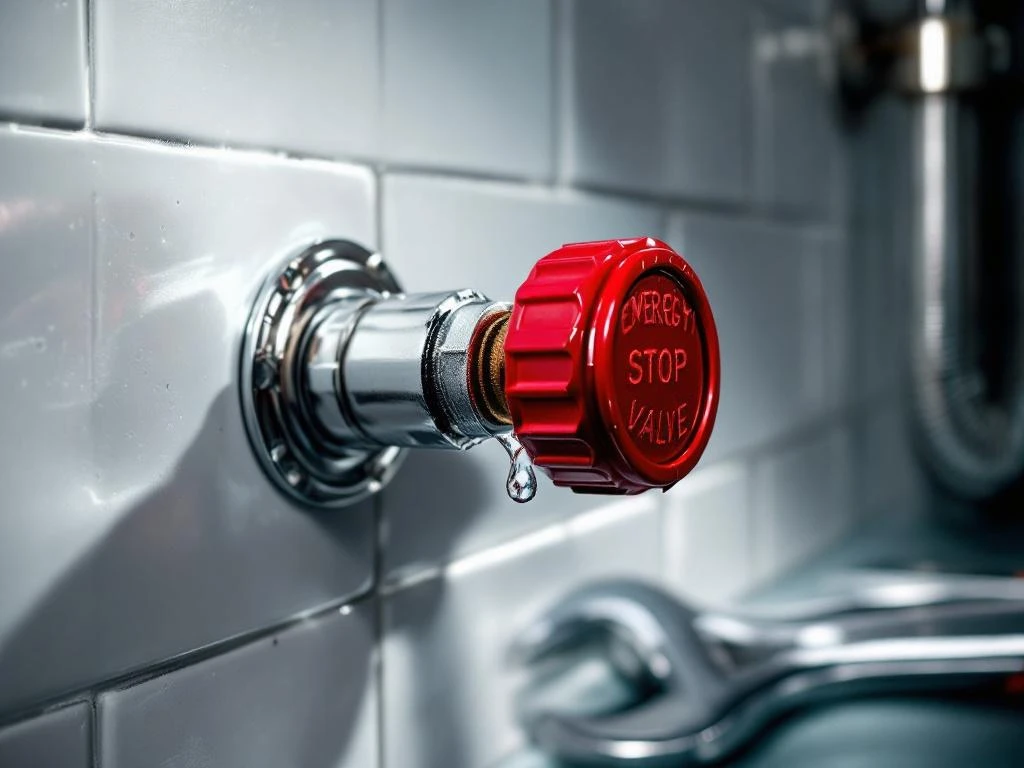
When your stopcock fails, you are faced with a situation that requires quick action. A faulty stopcock can cause water leaks and significant damage to your home. You should immediately locate the main valve to shut off the water supply, limit water damage, and contact a plumber. We will help you understand what to do when your stopcock fails, why it happens, and when you need professional help.
What is a stopcock and why is it so important?
A shutoff valve is a valve that controls the water supply to specific areas of your home or to your entire property. It allows you to quickly shut off the water in the event of leaks, repairs, or emergencies. Without a functioning shutoff valve, even small water problems can escalate into major damage.
You will usually find shut-off valves in several places in your home. The main shut-off valve is often located in the basement, utility room or where the water pipe from the municipal water supply enters. Local shut-off valves are found under sinks, behind toilets and by water heaters. These allow you to turn off the water to individual fixtures without affecting the rest of the home.
The stopcock acts as a safety feature that protects your home from water leaks. When something goes wrong with a pipe or fixture, you can quickly stop the water flow and prevent damage to floors, walls, and furniture. This is especially important in emergency situations such as burst pipes or major leaks.
How do you know that your stopcock is not working properly?
A faulty stopcock often shows obvious signs before it fails completely. Water continues to flow even after you have turned the tap all the way back on, or you notice the stopcock leaking around the handle when you try to adjust it. These are clear signs that something is wrong.
Here are the most common signs that your stopcock is not working properly:
- The water does not turn off even if you have turned the tap all the way on.
- The faucet is difficult to turn or is completely stuck
- Water is leaking around the handle or valve body
- You hear unusual noises such as beeping or knocking when you use the faucet
- The faucet turns without resistance or feels loose.
- Rust or discolored water comes out when you turn on the faucet
If you experience any of these problems, you should take a closer look at your stopcock. A water tap that doesn't close properly can cause continuous water leaks, even if they seem small. Over time, this can cause moisture damage to walls and under floors that can be expensive to repair.
Test your stopcock regularly by turning it all the way down and checking that the water actually stops. This is especially important for taps you rarely use, as they can become stiff and faulty without you noticing until you really need them.
What should you do immediately when the stopcock does not close?
When you discover that your stopcock is not working, you need to act quickly to minimize damage. Locate the main stopcock and shut off the water supply to your entire home. Then, limit the water damage and call emergency plumbing assistance if the situation is serious.
Follow these steps when the stopcock fails:
- Locate the main shut-off valve, usually located in the basement, utility room, or by the water meter. Turn it all the way to the stopcock to shut off the water supply.
- Open all the taps in the house to drain any remaining water from the pipes. This reduces the pressure and limits the leak.
- Collect water with towels, mops or buckets. Move furniture and valuables away from wet areas.
- Take photos of the damage for insurance purposes if the leak has caused visible damage.
- Turn off power to affected areas if water has reached electrical installations.
- Contact us at 401 24 700 for emergency plumbing assistance if you have a serious water leak or are unable to close the main tap.
For emergency water leaks, we can have a technician at your location in under an hour. This is important when the stopcock is leaking heavily or when the main tap is also faulty. A quick response prevents small problems from developing into extensive water damage affecting multiple rooms.
Why do stopcocks stop working over time?
Stopcocks stop working due to corrosion, mineral deposits, aging, and lack of maintenance. The water that flows through the faucets contains minerals like limescale, which over time become lodged in the valve mechanism. This makes the faucet stiff and eventually impossible to close properly.
Corrosion is one of the main reasons why stopcocks fail. The metal in the valve reacts with water and oxygen, especially in older installations with brass or iron components. The rust formation means that the valve no longer closes tightly, and you end up with a defective water tap that leaks even when it is closed.
Mineral deposits from hard water build up around the sealing rings and valve seat. This creates uneven surfaces that prevent the faucet from closing completely. In areas with particularly hard water, this happens more quickly, and stopcock repairs become necessary more often.
The sealing rings in your stopcock become brittle and hard with age. These rubber or fiber rings are supposed to create a watertight seal, but they lose elasticity over time. When the seals fail, the faucet starts to leak even though the valve mechanism itself is still working.
Faucets that are rarely used often become stiff and difficult to turn. If you haven't tested your stopcock in years, it may have become stuck in one position. When you finally need to use it in an emergency, you find that it won't turn or that it breaks when you try.
Improper installation can also lead to premature failure. If the faucet was installed with too much or too little sealant, or if it was tightened too hard, this can damage components and significantly shorten its lifespan.
Can you fix a faulty stopcock yourself, or do you need a plumber?
Simple problems like a stiff faucet can often be fixed by lubricating the valve with silicone spray. However, if the stopcock is leaking, not closing completely, or if you need to replace components, you should contact a plumber. Working on the main faucet always requires professional help to avoid major damage.
You can try these simple measures if the faucet is stiff but not leaking:
- Spray silicone-based lubricant around the valve stem
- Gently turn the tap back and forth several times to loosen it.
- Carefully tighten the gland nut if there is dripping around the handle
These methods only work for minor problems. If the faucet still doesn't work, or if you have to use a lot of force to turn it, you risk making the damage worse.
You need emergency plumbing help in these situations:
- The stopcock is leaking heavily and you can't stop the water
- The main tap is faulty and you need to shut off the water supply to the entire home.
- The faucet needs to be replaced, which requires turning off the water elsewhere.
- You notice corrosion or rust that indicates larger problems in the pipes
- The faucet breaks when you try to use it
A stopcock replacement requires the right tools, knowledge of plumbing systems, and the ability to work with pressurized water lines. Installation errors can lead to major water leaks that damage your home. A professional plumber has the experience to replace faucets quickly and safely, and ensures that the new faucet is properly installed and thoroughly tested.
We have plumbers available 24/7 to handle both emergency situations and planned replacements. For urgent jobs, we can be at your location in under an hour, while planned jobs are often completed the same day or the next business day.
When faced with a faulty stopcock, it’s all about assessing the risks. You can make minor adjustments yourself, but anything involving leaks, replacing components, or working on the main valve should be left to the professionals. This will save you from potentially costly water damage and ensure that the repair lasts over time.
Call 401 24 700 for emergencies or visit 24center.no for scheduled visits. We can help you with everything from acute water leaks to replacing old stopcocks, and our network of experienced plumbers covers all of Norway. Read more about our services or find our contact information to get in touch with us.
Vanlige spørsmål
How often should I test my stopcocks to make sure they are working?
You should test all the stopcocks in your home at least once a year, preferably twice. Turn them all the way on and off to make sure they haven't hardened. This is especially important for faucets you rarely use, like the main stopcock and local faucets behind toilets or under sinks. Regular testing prevents faucets from sticking and ensures they're working when you really need them.
How much does it cost to replace a faulty stopcock?
The cost of replacing a stopcock varies depending on the location, type, and complexity of the job. A simple replacement of a local stopcock under a sink typically costs between $1500-$3000 including labor and parts. Replacing a main stopcock is more complex and can cost from $3000-$8000 or more, depending on availability and whether it requires additional work on the pipes. Contact us for an accurate quote based on your specific situation.
Can I continue to live in my house while the stopcock is faulty?
It depends on the severity. If a local stopcock is broken but the main tap is working, you can usually stay there while waiting for repairs, as long as you keep the main tap accessible. However, if the main tap is broken or there is an active leak that you cannot stop, you should have it fixed immediately. Living with a broken main stopcock is risky, as you will not have the option to shut off the water in the event of an emergency leak.
How do I find the main stopcock if I've never used it before?
The main shut-off valve is usually located where the water main from the municipal network enters the home. First, check the basement, utility room, storage room or closet near the water meter. In apartments, it may be in a cabinet in the bathroom, kitchen or in a niche in the hallway. The valve is often marked with a red or blue handle and is on a thicker pipe than regular supply pipes. If you can't find it, you can contact your housing association, developer or a plumber who can help you identify its location.
What is the difference between a ball valve and a stem valve, and which is best?
A ball valve (ball valve) has a rotatable ball with a hole that opens or closes the flow of water with a quarter turn, while a stem valve requires more turns and uses a screw that presses a seal against the valve seat. Ball valves are generally more reliable, quicker to operate, and less prone to leaks over time. They are the preferred choice for modern installations, especially as a main shut-off valve. Older homes often have stem valves, which are more susceptible to limescale and corrosion.
Does insurance cover water damage caused by a faulty stopcock?
Most homeowners insurance policies cover sudden and unexpected water damage, but coverage depends on the cause and how well you’ve maintained your home. If your stopcock fails due to normal wear and tear or age, and you acted responsibly by calling a plumber quickly, the damage is usually covered. However, if the insurance company can prove a lack of maintenance or that you knew about the problem without taking action, they may deny your claim. Take photos of the damage, document the incident, and contact your insurance company as soon as possible.
Can I prevent problems with the stopcock through regular maintenance?
Yes, regular maintenance significantly extends the life of your stopcocks. Test all faucets at least annually by opening and closing them fully to prevent them from sticking. Lubricate the valve stem with a silicone-based lubricant if the faucet becomes stiff. Check for small leaks around the handle and gently tighten the gland nut if necessary. In areas with hard water, consider installing a water softener to reduce mineral deposits. If you see signs of corrosion or serious leaks, contact a plumber before the problem worsens.


