
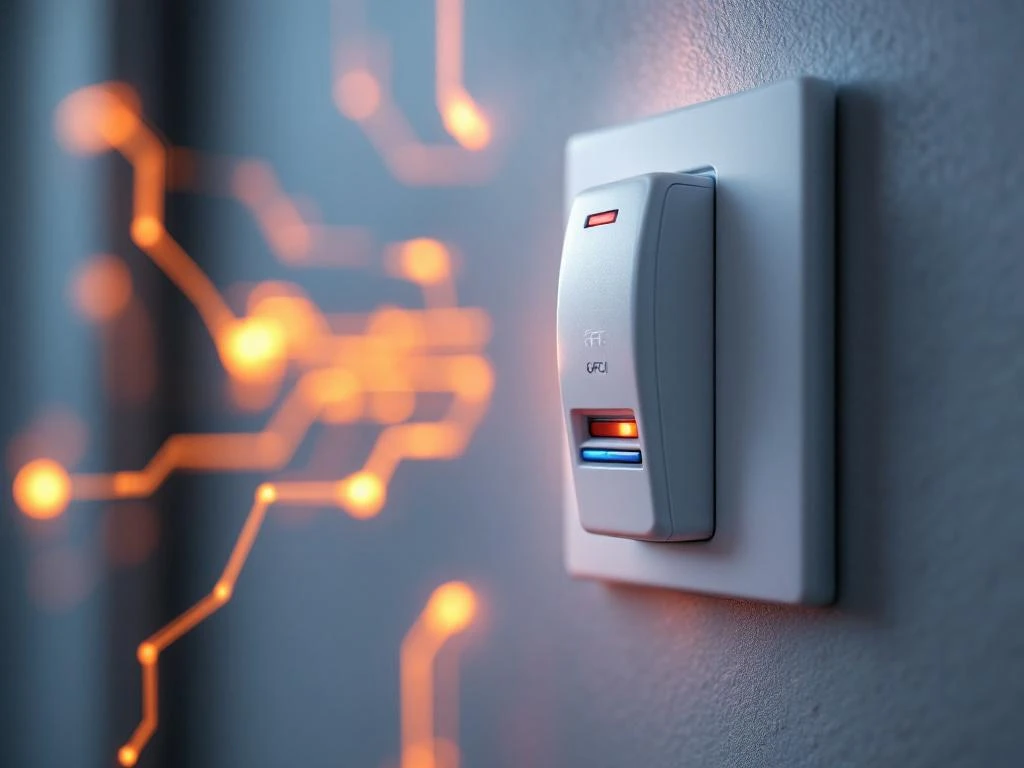
A ground fault circuit interrupter is a safety device that protects you from electric shock by monitoring the current in an electrical installation. When it detects an imbalance that indicates a leak, it automatically disconnects the power in milliseconds. This makes the ground fault circuit interrupter one of the most important safety components in Norwegian homes, and it is required by law in all modern electrical installations. Here you will find answers to the most common questions about ground fault circuit interrupter function and how to handle problems when it is triggered.
What is a ground fault circuit interrupter and why is it important?
A ground fault circuit interrupter is a protective switch that disconnects power when it detects electrical current leaking out of the normal circuit. It continuously measures the current flowing into and out of a circuit, and if the difference exceeds 30 milliamperes, it interrupts the current in less than 0.04 seconds.
The RCD protects you from two main dangers. The first is electric shock , which can occur if you touch a faulty appliance or a live part. At just 50 milliamperes, current through the body can be fatal, so the RCD's 30 milliampere limit provides you with important safety. The second danger is electrical fires , which often start with small current leaks in poor insulation or faulty appliances.
In Norway, we have had a requirement for RCDs in wet rooms since the 1970s, and today all new homes must have RCDs on all electrical circuits. This requirement has significantly reduced the number of fatalities and fires caused by electrical faults.
How does a ground fault circuit interrupter work?
The RCD works by comparing the current going into a circuit with the current coming back. In a normal, well-functioning electrical system, these should be exactly the same. If 10 amps go in, 10 amps should come back out.
Inside the RCD, both the phase conductor and the neutral conductor pass through a sensor that measures the current. When everything is working normally, these two conductors create magnetic fields that cancel each other out. However, if current leaks out, for example through a damaged cable or via a person touching a live part, an imbalance in the current occurs. This imbalance creates a magnetic field that triggers a mechanism that disconnects the current.
The entire process happens extremely quickly. From the time the RCD detects a fault until the power is disconnected, it typically takes just 20-30 milliseconds. This rapid response is crucial to protecting against serious injury, as a current through the body can cause cardiac arrest in just a few seconds.
You can test your RCD by pressing the test button located on the device. This simulates a ground fault and should cause the breaker to trip immediately. If it does not, contact an electrician.
Why does the ground fault circuit interrupter trip?
The RCD trips when it detects a current leak of more than 30 milliamps. This can be due to both real safety issues and less serious causes. Understanding the difference will help you assess how quickly you need to act.
Common causes of tripping include faulty electrical appliances, where the insulation has been damaged and allows electricity to leak out. Older appliances or equipment that has been exposed to moisture are particularly susceptible. If the RCD trips when you plug in a particular appliance, this is often the cause.
Moisture is another common cause. Water conducts electricity, and if it gets into electrical outlets, appliances, or electrical boxes, it can create a leak path. This is especially common in bathrooms, kitchens, and laundry rooms, or after water damage. The GFCI is doing exactly its job when it trips in such situations.
Worn insulation in the electrical system itself can also cause tripping. Over time, the insulation on cables can become brittle and crack, especially in older homes. This creates small current leaks that the RCD detects.
Noen ganger opplever du det som kalles «falsk utløsning» eller «nuisance tripping». Dette kan skje hvis du har mange apparater koblet til samme krets, siden alle elektriske apparater har en liten naturlig lekkasjestrøm. Når summen av disse nærmer seg 30 milliampere, kan selv små variasjoner utløse bryteren.
What should you do when the ground fault circuit interrupter trips?
When the RCD trips, it is important to handle the situation methodically to determine the cause and ensure that it is safe to reconnect the power. Start by leaving the circuit breaker in the tripped position while you investigate the situation.
Unplug all electrical appliances on the affected circuit. This includes anything plugged into an electrical outlet, even appliances in standby mode. If the GFCI covers multiple rooms, check all electrical outlets in those areas.
Once all appliances are disconnected, try turning the GFCI back on. If it stays on, the problem was probably one of the appliances. You can then reconnect the appliances one at a time to find the culprit. Once you find the appliance that is causing the breaker to trip, stop using it and have it checked or replaced.
If the RCD trips again immediately after you turn it on, even without any appliances connected, this indicates a problem in the electrical system itself . In such cases, do not make repeated attempts to turn the breaker on. This is a sign of a potential fire hazard or serious electrical fault that requires professional assistance.
Be extra careful if the tripping occurred in conjunction with moisture, visible damage to cables or sockets, or if you smell burning. In these situations, you should contact an electrician before attempting to turn the switch back on.
How can 24 Center help with RCD problems?
When you experience problems with your RCD that you can't solve yourself, we offer fast, professional assistance 24/7. Our qualified electricians understand that electrical problems don't follow normal business hours, and a tripped RCD can mean you're without power to essential functions in your home.
We help you with:
- Emergency troubleshooting and repair when the RCD trips repeatedly or fails to turn back on
- Identification of current leaks in the electrical system with professional measuring equipment
- Replacement of defective RCDs that are not working properly or fail tests
- Inspection of electrical installations after water damage or other incidents that may have affected safety
- Upgrading older fuse boxes that lack adequate ground fault circuit interrupter protection
Our network of local electricians covers the whole of Norway, and for urgent assignments, a technician can be at your location in less than an hour. Our customer service answers your call immediately, and the call is free. Many times we can also give you guidance over the phone to help you solve minor problems yourself.
Call 401 24 700 for emergencies or visit the 24 Center for scheduled visits. We offer a wide range of services to ensure your electrical system is safe and functioning properly. Please contact us for more information on how we can help you.
Vanlige spørsmål
How often should I test my RCD?
You should test your RCD at least once a month by pressing the test button. This ensures that the breaker is working properly and will protect you in an emergency. If the breaker does not trip when you press the test button, contact an electrician immediately for replacement.
Can I replace a ground fault circuit interrupter myself, or do I need to use an electrician?
In Norway, work on fuse boxes and earth leakage breakers requires that it be carried out by an authorised electrician. This is both required by law and important for your safety, as incorrect installation can result in the breaker not working when it is needed. Only electricians with the correct authorisation can carry out and approve such work.
What is the difference between a ground fault circuit interrupter and a regular fuse?
A regular fuse protects against overloads and short circuits by breaking the current when too much current flows through the circuit. A residual current device, on the other hand, protects against current leaks that can cause electric shock or fire, even at low currents. You need both types of protection in a modern electrical installation.
The ground fault circuit interrupter trips every time it rains or is damp outside - is this normal?
No, this is not normal and indicates that moisture is penetrating the electrical system, for example in external sockets, fittings or cable ducts. This is a sign that the insulation is compromised and must be repaired by an electrician. Continued use without repair can lead to serious electrical faults.
Can I use an extension cord or power strip on a circuit with a ground fault circuit interrupter?
Yes, it is safe to use extension cords and power strips on circuits with a ground fault circuit interrupter. However, remember that the ground fault circuit interrupter may trip if the total leakage current from many appliances exceeds 30 milliamps. Avoid overloading one circuit with too many appliances, and always use good quality extension cords.
How much does it cost to have an electrician check or replace a ground fault circuit interrupter?
The cost varies depending on the extent of the problem and whether it is an emergency assignment. A simple replacement of a ground fault circuit interrupter usually takes 1-2 hours, while extensive troubleshooting of the system can take longer. Contact 24 Center at 401 24 700 for a price estimate based on your specific situation.