
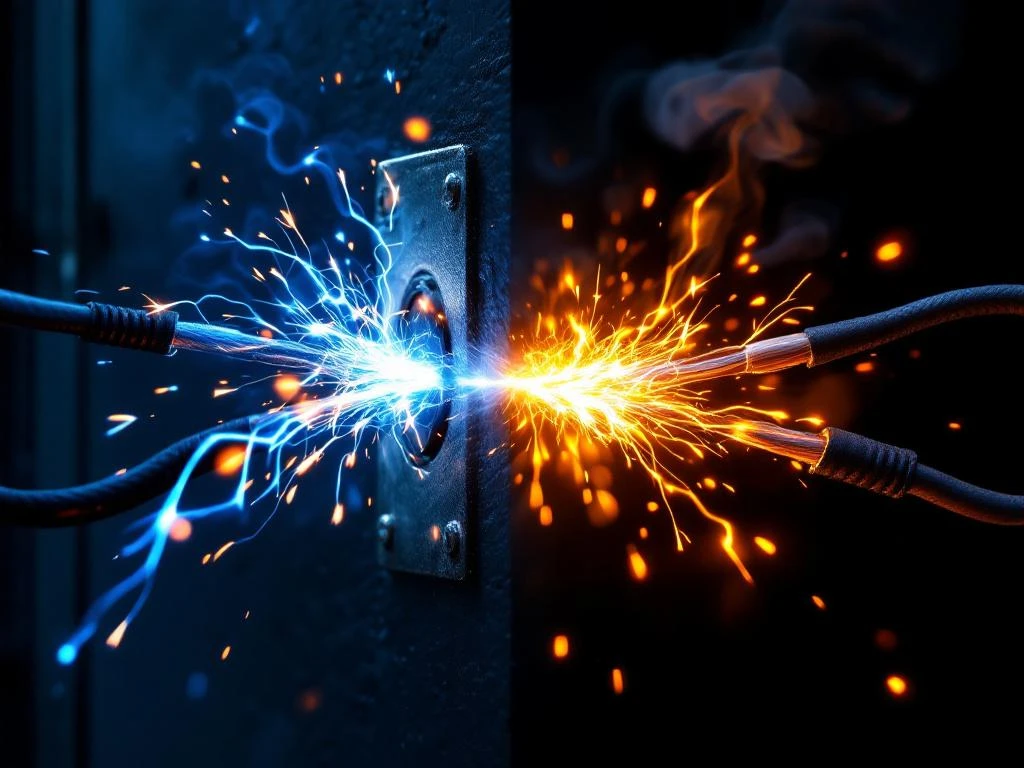
Ground faults and short circuits are two different types of electrical faults that can occur in your home. A ground fault occurs when current leaks to ground through unintended paths, while a short circuit occurs when current takes an unintended low-resistance path between phase and neutral. Both situations are potentially dangerous and require different protections. Understanding the difference will help you identify the problem and communicate properly with an electrician when you need help.
What is a ground fault and how does it occur?
Ground faults occur when electrical current leaks from the normal electrical circuit and travels to ground through unwanted paths. This can happen through damaged insulation, moisture, worn cables, or faulty electrical appliances. The current can travel through metallic parts, pipes, or even your body if you touch a faulty appliance.
Common causes of ground faults include old insulation that has become brittle over time, water leaks that penetrate electrical installations, or appliances that have developed internal faults. Damp areas such as bathrooms, kitchens, and laundry rooms are particularly susceptible because water conducts electricity efficiently.
The earth leakage circuit breaker protects you from earth faults by constantly monitoring the current flowing out and back into the circuit. If it detects that any current is leaking to earth, it immediately disconnects the power. This happens in milliseconds and protects you from dangerous electric shocks that can be life-threatening. The earth leakage circuit breaker is therefore an important safety mechanism in all modern electrical installations.
What is a short circuit and why is it dangerous?
A short circuit occurs when electrical current takes an unintentional low-resistance path between phase and neutral, or between two phases. This creates a sudden and sharp increase in current because the current encounters minimal resistance. The result is a dangerous situation that can lead to fire, equipment damage, and personal injury.
Short circuits can be caused by damaged wire insulation where two conductors come into direct contact, loose connections in sockets or fuse boxes, overloaded circuits that overheat and melt insulation, or faulty electrical equipment. Old installations with outdated cables are particularly susceptible.
The dangers of a short circuit are significant. The sudden surge in current generates extreme heat that can ignite flammable materials and start a fire. Equipment can be destroyed instantly, and sparks or explosions can occur. Circuit breakers and fuses are designed to cut off power when they detect excessive current, but damage may have already occurred before they react. This is why you should take a short circuit seriously and have an electrician investigate the cause immediately.
What is the difference between ground fault and short circuit?
The most important difference lies in how the fault occurs and which path the current takes. In a ground fault, the current leaks to ground through unwanted paths, while in a short circuit, the current flows directly between phase and neutral or between phases without going through the normal load.
The protective mechanisms that respond are also different. The earth leakage circuit breaker responds to earth faults by detecting an imbalance in the current, while regular fuses or circuit breakers respond to short circuits by detecting too high a current. You may experience that the earth leakage circuit breaker trips without the fuse blowing, or that the fuse trips without the earth leakage circuit breaker responding.
The symptoms you observe at home also vary. Ground faults often cause repeated trips on the RCD, especially when using certain appliances or in humid conditions. Short circuits usually cause more severe symptoms such as loud bangs, sparks, a burning smell, and the fuse blowing immediately.
The risk level for the two faults is different. Ground faults primarily pose a risk of electric shock to people, while short circuits pose the greatest risk of fire and property damage. Both situations require professional handling, but short circuits often require a more urgent response due to the risk of fire. Knowing the difference will help you describe the problem accurately when you call for electrician help.
How do you know if you have a ground fault or short circuit at home?
Identifying the type of electrical fault you have is based on the symptoms you observe. With a ground fault, the ground fault circuit interrupter will trip repeatedly, often when you use certain appliances such as washing machines, dishwashers or tools. The fault can also occur in humid conditions or when it rains, because moisture exacerbates the leakage to ground. Typically, specific circuits or appliances are affected.
In the case of a short circuit, the symptoms are more dramatic. You may hear loud bangs or see sparks from sockets or appliances. A burning smell is a clear sign that insulation or components are overheating. The circuit breaker or fuse blows immediately, and several appliances lose power at the same time because the entire circuit is disconnected. A short circuit usually occurs suddenly and without warning.
It is important to emphasize that you should not attempt to diagnose or repair electrical faults yourself while the system is live. Electrical installations can be dangerous and improper handling can result in serious injury or make the problem worse. If you experience repeated problems with the RCD or blown fuses, you should contact a qualified electrician for safe diagnosis and repair.
How do we handle electrical faults such as ground faults and short circuits?
When you experience electrical faults such as earth faults or short circuits, we offer fast and professional assistance 24/7. Our qualified electricians understand that electrical problems don't wait for office hours, and we are available 24/7 to handle both urgent emergencies and scheduled assignments.
We handle electrical faults with a safety-oriented approach that protects you and your property:
- Immediate telephone assistance from experienced customer service who can give you safety tips while you wait for the electrician
- Fast response time with an electrician on site within one hour for urgent tasks such as short circuits with a risk of fire
- Professional fault diagnosis with the right equipment to identify if you have a ground fault, short circuit or other electrical problems
- Ensure repair procedures are carried out by authorised electricians who comply with current regulations
- Prevention of further damage through thorough inspection and correction of underlying causes
- Nationwide network of local professionals who know your region's building stock and electrical challenges
Electrical faults can develop quickly and lead to dangerous situations. Do not attempt to repair power outages or electrical faults at home yourself. Call 401 24 700 for emergencies or visit 24center.no for scheduled visits. We offer comprehensive electrical fault finding and repair services , and you can find all relevant contact information on our website. We ensure that you receive safe and competent help when you need it most.
Vanlige spørsmål
Can I reconnect the ground fault circuit interrupter myself after it has tripped?
Yes, you can try tripping the GFCI once to see if it was a temporary fault. If it trips again immediately or repeatedly, leave it in the off position and contact an electrician. Repeated trips indicate a real ground fault that must be located and professionally repaired before you can safely use the circuit again.
How often should I test my RCD?
You should test your RCD at least every three months by pressing the test button. If the breaker is working properly, it should immediately turn off the power when you press the test button. This is a simple safety check that only takes seconds, but can be critical to your safety. If the test button does not work or the breaker does not turn off, contact an electrician immediately.
Which appliances most often cause ground faults in the home?
Appliances that are exposed to moisture or have moving parts are most likely to cause ground faults. This includes washing machines, dishwashers, refrigerators, freezers, power tools, and outdoor equipment. Older appliances with worn insulation or appliances that have gotten wet are especially at risk. If the ground fault circuit interrupter consistently trips when you use a particular appliance, you should stop using it and have it checked by a professional.
Is it dangerous to continue using electricity if the fuse blows frequently?
Yes, repeated fuse blows are a serious warning sign that should never be ignored. It indicates either an overload, short circuit, or other electrical fault that could cause a fire. Never use a higher amperage fuse than specified to 'fix' the problem, as this removes an important safety mechanism. Contact an electrician to identify and rectify the underlying cause.
What should I do immediately if I see sparks or smell burning from an electrical outlet?
Turn off the main fuse or circuit breaker for the relevant circuit immediately to remove the power. Do not use the socket or connected appliances. If you see smoke or flames, call the fire department on 110 first. Then contact an electrician urgently to inspect and repair the installation before putting it back into use. These are signs of a serious short circuit or overheating that could lead to a fire.
Can bad weather like rain and thunder cause ground faults?
Yes, damp weather can definitely trigger or worsen ground faults, especially if you have existing insulation or moisture ingress issues. Water entering outdoor outlets, light fixtures, or poorly sealed penetrations can create leakage paths to ground. If your ground fault circuit interrupter consistently trips in rainy weather, this indicates that you have moisture issues in your electrical installation that need to be addressed by an electrician.
Do I need both a ground fault circuit interrupter and circuit breakers in the fuse box?
Yes, you need both because they protect against different types of faults. The earth leakage circuit breaker protects against electric shock by detecting current leakage to earth, while the circuit breakers protect against overload and short circuit by detecting too high a current. They complement each other and together provide a complete safety package for your electrical installation. Modern installations should have both types of protection installed according to current regulations.